Best Variable ND Filters for Photo and Video

Affiliate disclosure: Some links on this page are affiliate links. If you buy through them we earn a small commission at no extra cost to you. Recommendations are research-driven; we don't claim personal use of every product reviewed. Product prices and availability are accurate as of the date published and are subject to change. Always check Amazon for current pricing before purchasing. Learn more.

Quick Picks
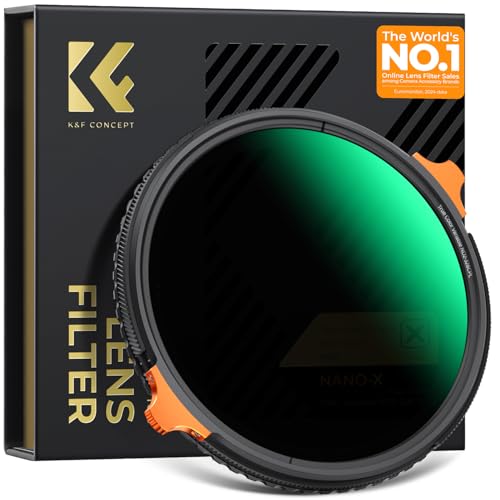
K&F CONCEPT 77mm True Color Variable ND2-32 & Polarizer in 1 Lens Filter
Combines variable ND and CPL in one filter with self-locking infinite rotation to prevent the X-artifact
Buy on Amazon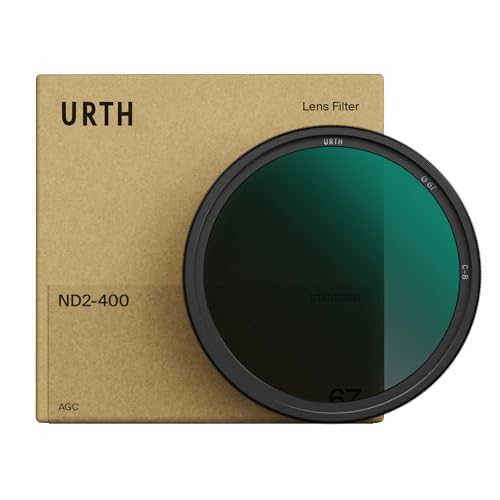
Urth 77mm ND2-400 Variable ND Lens Filter
Covers up to 8.66 stops of light reduction, a wider range than most variable filters in its class
Buy on Amazon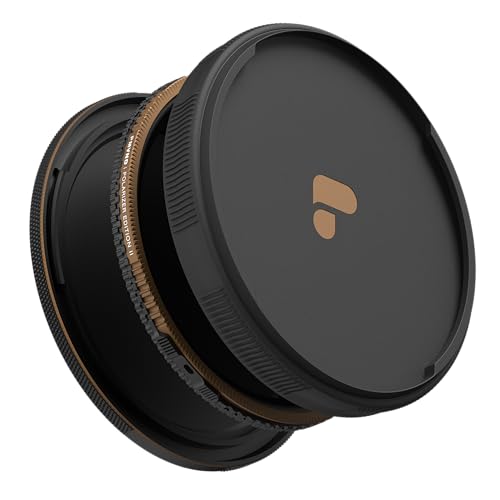
PolarPro - Chroma VND/PL - McKinnon Series - 2-5 Stops - 77mm
Bi-rotational design allows independent polarization control separate from the VND setting
Buy on Amazon| Product | Price Range | Top Strength | Key Weakness | Buy |
|---|---|---|---|---|
| K&F CONCEPT 77mm True Color Variable ND2-32 & Polarizer in 1 Lens Filter best overall | $$ | Combines variable ND and CPL in one filter with self-locking infinite rotation to prevent the X-artifact | Stop range tops out at ND32 (5 stops), which is narrower than some competing variable filters | Buy on Amazon |
| Urth 77mm ND2-400 Variable ND Lens Filter best value | $ | Covers up to 8.66 stops of light reduction, a wider range than most variable filters in its class | The wider stop range increases the risk of color shift at the extreme end of the rotation | Buy on Amazon |
| PolarPro - Chroma VND/PL - McKinnon Series - 2-5 Stops - 77mm best premium | $$ | Bi-rotational design allows independent polarization control separate from the VND setting | 2–5 stop range is the narrowest of any filter in this guide, limiting versatility in moderate light | Buy on Amazon |
| NiSi Swift Variable ND Filter, True Color, Nano Coated - 77mm, with Cloth also consider | $$ | Swift System compatibility allows a second filter to snap onto the front for expanded versatility | System-specific design means full versatility requires purchasing additional NiSi Swift accessories | Buy on Amazon |
| Urth 77 mm Variable ND Filter ND2-32 (Pro) also consider | $$ | 34-layer dual-side COR-NANO MAX coating delivers under 1.5% reflectivity per the manufacturer | ND2–32 range matches the basic Urth offering but at a higher price tier | Buy on Amazon |
| K&F CONCEPT 77mm Variable ND4-64 Lens Filter & Polarizing Effect 2-in-1 also consider | $ | Putter-style adjustable frame with labeled stop markings makes precise exposure setting straightforward | ND4 minimum means one stop of light is already blocked at the lowest setting, reducing flexibility in low light | Buy on Amazon |
Variable ND filters solve a real problem: you want one filter that handles bright midday sun, golden-hour backlight, and overcast conditions without swapping glass between every shot. The trade-off the category never fully escapes is that stacking two polarizing elements — which is how variable ND filtration works — introduces the risk of cross-polarization artifacts (the X pattern), color cast, and image softening as density increases. Thread size and stop range narrow the field further, since a filter that performs well at three stops may degrade noticeably at seven.
The picks in this guide were chosen by comparing manufacturer specifications and current Amazon listings. This site does not test products. For a broader look at fixed and variable options across the category, the Lens Filters hub covers the full landscape.
Top Picks
K&F CONCEPT 77mm True Color Variable ND2-32 & Polarizer in 1 Lens Filter
The most common complaints about variable ND filters — color shift toward yellow and the X-artifact at wider angles — are the two problems this filter addresses most directly. According to the manufacturer, a titanium coating process eliminates the partial-yellow cast that plagues many filters in this class, and the self-locking frame rotates infinitely between ND2 and ND32 without producing the cross pattern that makes wide-angle shooting difficult.
Combining variable ND and CPL filtration into a single ring is a meaningful convenience for photographers moving between water, glass, and sky in a single session. The listing describes 28 multi-layer coatings on imported AGC optical glass, specified as waterproof and scratch-resistant. That coating count is consistent with what manufacturers targeting image quality rather than budget volume typically publish.
The stop range — ND2 to ND32, or one to five stops — is worth noting plainly. Videographers who need to maintain a 180-degree shutter rule in bright sun may find five stops limiting on a sunny day at base ISO. For most photo and hybrid video use, five stops covers the majority of practical situations. One overlooked detail in the listing: an 82mm lens cap is required for this 77mm filter, so factor that into the purchase.
Check current price on Amazon.
Urth 77mm ND2-400 Variable ND Lens Filter
The standout specification here is the stop range. According to the manufacturer, the ND2-400 covers up to 8.66 stops of light reduction — substantially wider than the five-stop ceiling on most consumer variable filters. For photographers shooting in rapidly changing light who want a single filter to carry from overcast to full midday sun, that range is the core argument for this filter over the alternatives.
Urth specifies Japanese AGC glass with nano coating for HD clarity and reduced flare. The locking min-max rim is a practical design decision: it prevents the over-rotation that causes the X-effect, which is a more common failure point on wider stop-range filters because there is more rotational distance to mismanage. The listing backs the filter with a lifetime guarantee, which is the kind of durability commitment that matters for a piece of glass carried regularly.
The honest trade-off is inherent to the category. A wider stop range means the filter must manage more severe cross-polarization at the high end of the rotation. Whether that affects a given shooter depends on how frequently they push past six or seven stops. For most users who stay in the middle of the range, the performance ceiling is unlikely to be the limiting factor.
Check current price on Amazon.
PolarPro Chroma VND/PL McKinnon Series — 2–5 Stops — 77mm
PolarPro’s design decision here is different from every other filter in this guide. The bi-rotational frame separates the polarization control from the variable ND adjustment, meaning both elements can be dialed independently rather than being coupled together. According to the manufacturer, that separation is what allows Chroma Glass to deliver neutral color accuracy — the polarizer isn’t fighting the ND rotation for the same ring.
The 16-layer coating is specified for anti-scratch, anti-reflective, and anti-fingerprint performance. The manufacturer describes the Chroma Glass formulation as providing unrivaled neutral color accuracy, which is the kind of claim that appeals to cinematographers and hybrid shooters where color grading downstream amplifies any cast. Available in sizes from 49mm to 95mm, this filter covers a wide range of lens mounts for those building a system around it.
The narrowest stop range in this guide — two to five stops — is the honest limitation. It is not a filter for scenes that demand heavy ND work. For run-and-gun video in variable light where the polarizer and exposure control need to move independently, the bi-rotational mechanism is a meaningful engineering difference from the competition.
Check current price on Amazon.
NiSi Swift Variable ND Filter, True Color, Nano Coated — 77mm
What distinguishes this filter from a standalone variable ND is the NiSi Swift System compatibility. According to the listing, an additional Swift filter can snap onto the front of this filter, allowing a photographer to combine, for example, a variable ND with a circular polarizer or soft-focus element without stacking multiple threaded rings. For travel photographers or documentary shooters who carry minimal gear, that modular capability compresses a multi-filter kit into a more manageable system.
The manufacturer specifies True Color coating to prevent the yellow tint common in variable ND filters, and 20-layer multi-nano coating on both sides for dustproof and waterproof protection. The ND2 to ND32 range matches the best-overall pick, and the listing specifies the thin frame is designed to eliminate vignetting on focal lengths of 35mm and longer. A removable control handle, protective cap, storage pouch, and microfiber cloth are included in the kit.
The practical consideration is ecosystem lock-in. The Swift System compatibility is a genuine advantage for shooters already using NiSi’s ecosystem or planning to build into it. For someone who just wants a standalone variable ND, the system-specific design adds cost and context that may not translate to value.
Check current price on Amazon.
Urth 77mm Variable ND Filter ND2-32 (Pro)
Where the standard Urth ND2-400 emphasizes stop range, the Pro model focuses on coating quality. The manufacturer specifies a 34-layer dual-side COR-NANO MAX coating with under 1.5% reflectivity — a precise figure that positions this filter above the general “multi-layer coating” language used by most competitors. For photographers prioritizing contrast and flare resistance over a wide stop range, that specification is the relevant differentiator.
The frame design addresses the mechanical side of variable ND reliability. According to the listing, the square-edge grip is tuned for resistance with a hard stop that prevents over-rotation and eliminates accidental X-pattern shifts. The manufacturer also specifies an aerospace-grade 6061 aluminium frame — a material call-out consistent with products designed for long-term field use rather than occasional hobbyist use.
The ND2-32 range is identical to several other filters in this guide. The case for the Pro rests entirely on the coating specification and frame engineering rather than stop versatility. For shooters who are already satisfied with five stops and want the highest-specification glass in that range, this is the stronger choice within the Urth lineup.
Check current price on Amazon.
K&F CONCEPT 77mm Variable ND4-64 Lens Filter & Polarizing Effect 2-in-1
The differentiating feature here is the putter-style adjustable frame with labeled stop markings at each of the five positions from ND4 to ND64. According to the listing, the CNC non-slip putter design makes it straightforward to confirm which stop the filter is set to without guessing by rotation angle — a practical advantage in fast-moving shooting conditions where precise exposure changes happen quickly. The stop labels are engraved on the frame rather than printed, which affects long-term readability.
The listing specifies 28-layer AGC glass coatings rated waterproof and scratch-resistant, consistent with the other K&F CONCEPT filter in this guide. The CPL function is integrated, specified to remove glare from non-metallic surfaces and enhance color and contrast. The aluminum alloy frame with CNC machining follows the same construction language as the broader K&F lineup.
The ND4 floor is worth understanding before purchase. Starting at two stops of light reduction means there is always some light being blocked, even at the minimum setting. For photographers who regularly shoot in low-light conditions and want a filter they can leave on the lens throughout the day, that floor may create exposure problems in dim scenes. In bright and moderate light, the ND4–ND64 range covers the scenarios most photographers encounter most often.
Check current price on Amazon.
Buying Guide
Stop Range: How Much Density Do You Actually Need
The stop range printed on a variable ND filter — ND2-32, ND2-400 — describes how many total stops of light the filter can block across its rotation. One stop cuts light in half; five stops reduce it to roughly 3% of the original. For most outdoor photography, two to five stops handles the majority of practical situations: slowing a waterfall, managing backlight, or holding a portrait lens at a wide aperture in afternoon sun.
Video work changes the calculus. Maintaining the 180-degree shutter rule — shutter speed at double the frame rate — often requires more aggressive light reduction in daylight, especially when shooting at base ISO on a camera with a native 1/50 or 1/100 ceiling. Shooters in that workflow frequently reach for six, seven, or eight stops. The Urth ND2-400 covers up to 8.66 stops per the manufacturer, which is the widest range in this guide.
The trade-off is not abstract. A wider stop range means the filter must perform across more extreme cross-polarization angles, and image quality at the high end of a wide-range filter is typically lower than image quality in the middle of a narrower filter’s range. Choosing the stop range closest to actual shooting conditions, rather than the widest available, is the more disciplined approach.
The X-Artifact: Why It Happens and What Prevents It
Cross-polarization produces a dark X-shaped pattern across the frame when a variable ND filter is rotated toward maximum density — particularly visible on wide-angle lenses and large clear areas like sky. It occurs because the two polarizing elements inside the filter reach an angle where they block light unevenly across the image circle. Every variable ND filter is susceptible to it; the difference is where in the rotation it begins and how severely it manifests.
Mechanical hard stops and locking rims prevent over-rotation into the X zone. The manufacturer-specified locking rim on the Urth ND2-400 and the hard-stop grip on the Urth Pro address this mechanically. The K&F CONCEPT True Color uses self-locking infinite rotation within a defined range to achieve the same outcome.
Wide-angle lenses are the most demanding application because the filter covers a larger image circle and the polarization effect is visible across a wider portion of the frame. For lenses wider than 24mm, choosing a filter with an explicitly narrower stop range or a hard-stop mechanism is the more conservative specification decision.
Color Accuracy: What Coating Claims Actually Mean
Every filter in this guide claims color neutrality in some form. The terminology varies — True Color, Chroma Glass, COR-NANO MAX — but the underlying goal is the same: to prevent the filter from introducing a color cast that shifts image or footage toward yellow, green, or any other hue that requires correction in post.
Color neutrality matters more in some workflows than others. For JPEG shooters or videographers delivering without a color grade, a visible warm cast from the filter is a problem that affects the final output directly. For raw shooters with a full color grading pipeline, a consistent and predictable cast is manageable — but it adds a correction step. The manufacturer’s color claims are specifications, not verified test results from this site. Using those claims comparatively across filters in the same category is reasonable; treating them as absolute guarantees is not.
Coating layer count is a related specification. The Urth Pro specifies 34 layers with under 1.5% reflectivity, which is the most precisely stated figure in this guide. Higher layer counts generally indicate more engineering investment in flare control and contrast preservation, though the relationship is not perfectly linear. For the full range of filter options by thread size, the Lens Filters hub breaks down what to look for across fixed and variable types.
Thread Size and Step-Up Rings
Variable ND filters are thread-specific. A 77mm filter threads onto a 77mm lens and nowhere else without an adapter. Step-up rings allow a larger filter to be used on a smaller lens — a 77mm filter can cover a 67mm or 72mm lens with the appropriate step-up ring — but they add a thin extension that can affect front-element clearance and, rarely, introduce vignetting on very wide lenses.
Standardizing on the largest lens thread in a kit is the common approach: buy one filter sized for the largest lens, then use step-up rings on smaller lenses. All six filters in this guide are sized at 77mm, which is the most common thread size on mid-range telephoto and standard zoom lenses. For a comprehensive look at options in this specific thread size, the guide to best 77mm ND filters covers the full variable and fixed spectrum.
The step-up ring approach is cost-effective but introduces one practical issue: lens caps. The K&F CONCEPT True Color listing notes explicitly that an 82mm lens cap is required for the 77mm filter — a detail that applies to most variable ND filters with wider outer frames and is easy to overlook at purchase.
CPL Integration: Convenience Versus Control
Four of the six filters in this guide combine variable ND with circular polarizer function. The integrated approach reduces the number of filters to carry and eliminates the additional light loss and optical complexity of stacking two separate filter rings. For travel photographers and hybrid video shooters, that consolidation is a practical win.
The limitation is coupling. On a standard integrated ND-CPL, rotating the ND changes the polarization angle simultaneously. The PolarPro McKinnon is the exception: the bi-rotational design allows each element to be adjusted independently. According to the manufacturer, that separation is central to how the Chroma Glass achieves neutral color accuracy. For shooters who need precise polarization control — managing reflections on water, cutting haze in landscapes — independent adjustment is the meaningful differentiator. For shooters who use the CPL function occasionally, the integrated coupling on the other filters is unlikely to create consistent problems.
Frequently Asked Questions
What is the X-artifact in a variable ND filter and how do I avoid it?
The X-artifact is a dark cross-shaped pattern that appears across the frame when a variable ND filter is rotated to or beyond its maximum usable density. It is caused by cross-polarization between the two internal filter elements at extreme angles. Most filters with a mechanical hard stop or locking rim prevent over-rotation into the zone where the X appears — the Urth ND2-400 and Urth Pro both specify this mechanism. Staying within the marked stop range on any variable ND filter is the most reliable way to avoid the artifact regardless of design.
How does a variable ND filter differ from a fixed ND filter?
A fixed ND filter blocks a single, constant amount of light — ND8 always cuts three stops, for example. A variable ND filter uses two rotating polarizing elements to cover a continuous range of densities from a minimum to a maximum stop value. Variable filters offer flexibility in changing light without swapping glass, but the stacked polarizer design introduces complexity around color cast and the X-artifact that fixed filters do not have. Fixed ND filters are generally simpler optically; variable filters are more convenient logistically.
Is a 77mm variable ND filter compatible with my lens?
Only if your lens has a 77mm front filter thread. The thread diameter is marked on the lens barrel, usually near the front element, preceded by a ø symbol. A 77mm filter will not thread onto a 67mm or 82mm lens directly. Step-up rings can adapt a 77mm filter for use on lenses with smaller thread sizes — a 72-77mm step-up ring, for example — but are not needed and should not be used when the lens thread matches the filter size.
Should I buy the K&F CONCEPT ND2-32 or the Urth ND2-400 for general outdoor photography?
For most outdoor photo work, the K&F CONCEPT True Color ND2-32 covers the practical range and specifically addresses color cast through its titanium coating, per the manufacturer. The Urth ND2-400 makes more sense for video shooters who need to maintain a fixed shutter speed across a wide range of lighting conditions, or for photographers shooting in extremely bright midday light without the ability to lower ISO further. The wider stop range on the Urth comes with the inherent optical complexity of managing a larger rotation window.
Do variable ND filters work with autofocus?
Variable ND filters do not mechanically interfere with autofocus because they sit in front of the lens and do not affect the lens’s internal focusing mechanisms. Light transmission is reduced at higher density settings, which can slow AF performance in low-contrast or low-light scenes on some camera systems. In bright conditions across the typical stop range these filters cover, autofocus performance is not meaningfully affected.
K&F CONCEPT 77mm True Color Variable ND2-32 & Polarizer in 1 Lens Filter
- Combines variable ND and CPL in one filter with self-locking infinite rotation to prevent the X-artifact
- Titanium coating addresses the partial-yellow color shift common in variable ND filters, per the manufacturer
- Stop range tops out at ND32 (5 stops), which is narrower than some competing variable filters
- Requires an 82mm lens cap despite the 77mm thread size, an easy-to-overlook accessory gap
Urth 77mm ND2-400 Variable ND Lens Filter
- Covers up to 8.66 stops of light reduction, a wider range than most variable filters in its class
- Locking min-max rim prevents over-rotation and eliminates the X-effect by design
- The wider stop range increases the risk of color shift at the extreme end of the rotation
PolarPro - Chroma VND/PL - McKinnon Series - 2-5 Stops - 77mm
- Bi-rotational design allows independent polarization control separate from the VND setting
- Chroma Glass formulation is specified by the manufacturer for unrivaled neutral color accuracy
- 2–5 stop range is the narrowest of any filter in this guide, limiting versatility in moderate light
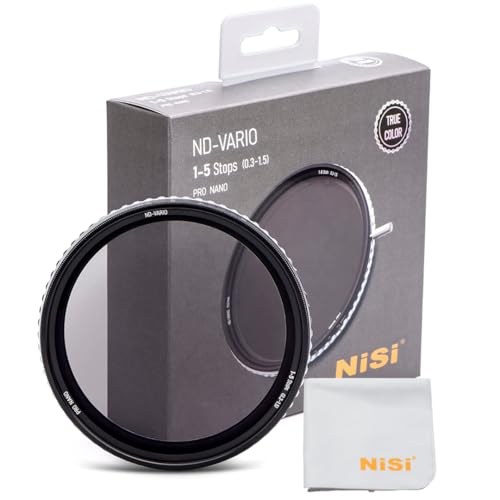
NiSi Swift Variable ND Filter, True Color, Nano Coated - 77mm, with Cloth
- Swift System compatibility allows a second filter to snap onto the front for expanded versatility
- 20-layer nano coating on both sides is specified for dustproof and waterproof surface protection
- System-specific design means full versatility requires purchasing additional NiSi Swift accessories
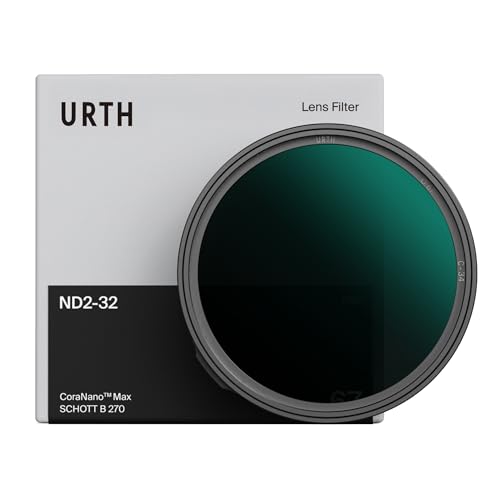
Urth 77 mm Variable ND Filter ND2-32 (Pro)
- 34-layer dual-side COR-NANO MAX coating delivers under 1.5% reflectivity per the manufacturer
- Hard-stop square-edge grip prevents over-rotation and accidental X-pattern shifts
- ND2–32 range matches the basic Urth offering but at a higher price tier
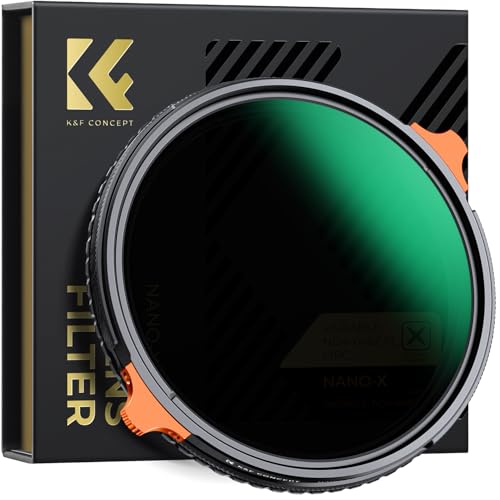
K&F CONCEPT 77mm Variable ND4-64 Lens Filter & Polarizing Effect 2-in-1
- Putter-style adjustable frame with labeled stop markings makes precise exposure setting straightforward
- 28-layer AGC glass coating is specified for waterproof and scratch-resistant surface protection
- ND4 minimum means one stop of light is already blocked at the lowest setting, reducing flexibility in low light
Where to Buy
K&F CONCEPT 77mm True Color Variable ND2-32 & Polarizer in 1 Lens FilterSee K&F CONCEPT 77mm True Color Variable … on Amazon