Best Macro Lenses for Canon, Sony and Nikon Mirrorless

Affiliate disclosure: Some links on this page are affiliate links. If you buy through them we earn a small commission at no extra cost to you. Recommendations are research-driven; we don't claim personal use of every product reviewed. Product prices and availability are accurate as of the date published and are subject to change. Always check Amazon for current pricing before purchasing. Learn more.

Quick Picks
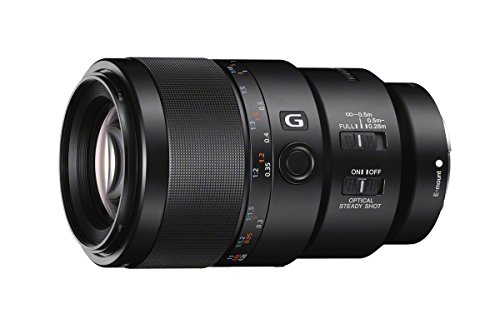
Sony FE 90mm F2.8 Macro G OSS Full-Frame Lens
True 1:1 magnification with Optical SteadyShot stabilization for handheld macro work
Buy on Amazon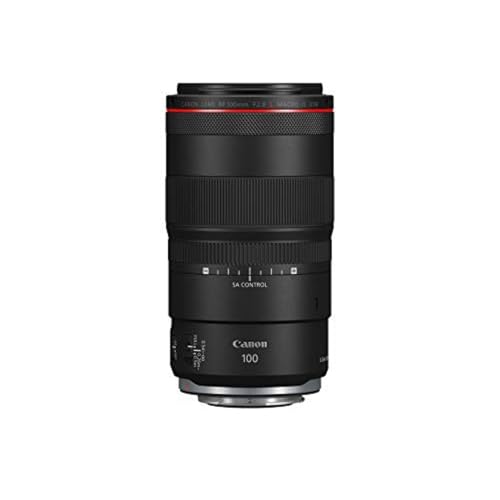
Canon RF100mm F2.8 L Macro is USM Lens
World's first medium telephoto macro lens to reach 1.4x magnification, exceeding the 1:1 standard
Buy on Amazon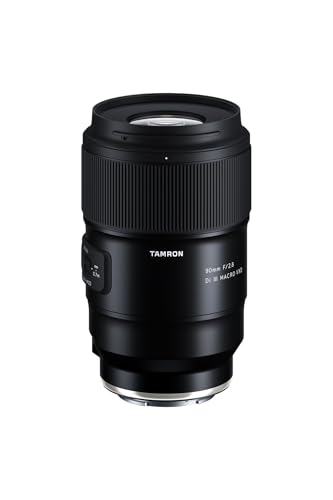
Tamron 90mm F/2.8 Di III VXD 1:1 Macro for Sony E Mount Full Frame/APS-C Mirrorless Cameras
Full 1:1 magnification with high-speed VXD autofocus at a price well below Sony's G OSS
Buy on Amazon| Product | Price Range | Top Strength | Key Weakness | Buy |
|---|---|---|---|---|
| Sony FE 90mm F2.8 Macro G OSS Full-Frame Lens best overall | $$$ | True 1:1 magnification with Optical SteadyShot stabilization for handheld macro work | At 602 g it is one of the heavier options in this focal-length class | Buy on Amazon |
| Canon RF100mm F2.8 L Macro is USM Lens best premium | $$$ | World's first medium telephoto macro lens to reach 1.4x magnification, exceeding the 1:1 standard | L-series price point is the highest in this roundup | Buy on Amazon |
| Tamron 90mm F/2.8 Di III VXD 1:1 Macro for Sony E Mount Full Frame/APS-C Mirrorless Cameras best value | $$$ | Full 1:1 magnification with high-speed VXD autofocus at a price well below Sony's G OSS | Manufacturer notes macro shooting benefits from higher shutter speeds or tripod use, more so than stabilized alternatives | Buy on Amazon |
| Nikon NIKKOR Z MC 105mm f/2.8 VR S best for professionals | $$$ | S-Line optical design achieves 1:1 magnification with virtually no distortion or aberrations, per Nikon | 105mm reach and S-Line construction add size and weight compared to compact alternatives | Buy on Amazon |
| Canon RF85mm F2 Macro is STM Lens also consider | $$$ | Bright f/2 aperture and 5-stop Hybrid IS make it the most capable low-light option in this group | 0.5x maximum magnification is macro-style, not true 1:1 — a meaningful limitation for close-up specialists | Buy on Amazon |
| Sony SEL50M28 FE 50mm F2.8 Full Frame E-mount Lens (Black) also consider | $$$ | True 1:1 magnification in a compact 2.78-inch, 8.3 oz body — the smallest 1:1 option for Sony E mount here | 50mm focal length provides less working distance from the subject than 90mm or 105mm alternatives | Buy on Amazon |
Macro photography asks one precise question: how close can you get, and what does the image look like when you’re there? The answer depends on three variables — focal length (which determines working distance from your subject), mount compatibility, and whether the lens achieves true 1:1 reproduction or stops at the 0.5x “macro-style” threshold. Those are not equivalent. A 1:2 lens renders a subject at half life size. A 1:1 lens renders it at actual life size on the sensor. For insect detail, coin edges, or botanical work, that distinction matters.
The picks below were chosen by comparing manufacturer specifications and current Amazon listings across Canon RF, Sony E, and Nikon Z mount options. This site does not test products. For a broader look at the category, the Macro Lenses hub covers additional context and options.
Top Picks
Sony FE 90mm F2.8 Macro G OSS Full-Frame Lens
The 90mm focal length is where most working macro photographers land, and Sony’s G OSS delivers the full specification set that justifies that preference. The manufacturer specifies 1:1 magnification, a 0.28 m minimum focusing distance, and Optical SteadyShot stabilization — the combination that makes handheld macro plausible rather than aspirational. Stabilization matters more at 1:1 than at any other shooting distance, because the depth of field at that magnification can be measured in millimeters.
The optical construction includes Super ED glass with multi-coating to manage flare, Nano AR coating for reflection suppression, and a 9-blade circular aperture. According to the manufacturer, corner-to-corner sharpness is achieved through advanced spherical elements — a claim consistent with what the G-series designation typically signals in Sony’s lineup. The Direct Drive SSM autofocus is described as quiet and precise, which is relevant for video work and for situations where subject movement demands fast acquisition rather than manual rack focusing.
Dust and moisture resistance is included per the listing. At 602 g, this is not a light lens, and Sony shooters comparing it to the Tamron 90mm below will find a meaningful weight and price difference for features that overlap substantially. For photographers who want the Sony ecosystem guarantee and built-in stabilization without a separate body-only calculation, the case for this lens is strong.
Check current price on Amazon.
Canon RF100mm F2.8 L Macro IS USM Lens
Canon’s RF100mm L Macro occupies a category of one: the manufacturer describes it as the world’s first medium telephoto macro lens with 1.4x maximum magnification. That exceeds the 1:1 standard that defines true macro and is relevant for photographers whose subjects — gemstones, insect compound eyes, circuit board traces — reward that additional reach into the subject. For most macro work, 1:1 is sufficient. For the subset of shooters who push beyond it, no current RF option competes with this specification.
The Hybrid IS system compensates for both angular and shift camera shake during macro shooting, per Canon’s listing. That distinction matters at extreme magnifications, where shift movement — the lateral wobble of a handheld camera — is typically harder to correct than rotational shake. The Spherical Aberration Control Ring is unusual enough to warrant specific mention: it allows independent adjustment of foreground and background bokeh shape, giving photographers control over rendering character that is absent from every other lens in this group.
L-series build quality and pricing apply here. For Canon RF shooters doing serious macro work — or using the 100mm as a dual-purpose portrait lens — the Canon 100 Macro Lens Buyer’s Guide: RF and EF Options covers the full RF and EF history of this focal length. The RF100mm L Macro is the current ceiling for Canon mirrorless macro capability.
Check current price on Amazon.
Tamron 90mm F/2.8 Di III VXD 1:1 Macro for Sony E Mount
Sony E mount shooters have a genuine choice at 90mm, and the Tamron 90mm VXD is not a compromise — it is a competing specification at a different price. The manufacturer specifies full 1:1 magnification, VXD linear autofocus described as high-speed and high-precision with superb subject tracking, moisture-resistant construction, and BBAR-G2 plus fluorine coating. Those are professional-tier specifications delivered without the G-series premium.
The outstanding flat-field performance the manufacturer cites is worth understanding. Flat-field correction means the plane of sharpest focus is genuinely flat rather than curved — relevant for copy stand work, product photography, and any application where a flat subject must be sharp from corner to corner. Many general-purpose lenses exhibit field curvature that becomes apparent in macro work and is invisible at longer distances.
The manufacturer’s note that effective macro photography benefits from higher shutter speeds or tripod support is an honest specification acknowledgment rather than a limitation unique to this lens. Working at 1:1 without stabilization requires technique compensation regardless of the optic. Sony shooters comparing this lens to the FE 90mm G OSS above should weigh whether in-lens stabilization is worth the additional cost given their body’s in-body stabilization capabilities.
Check current price on Amazon.
Nikon NIKKOR Z MC 105mm f/2.8 VR S
Nikon Z mount photographers working at the serious end of macro have one answer: the NIKKOR Z MC 105mm S. Nikon describes it as achieving new levels of sharpness, contrast, and clarity with virtually no distortion or aberrations through next-generation S-Line optics. The 1:1 magnification is confirmed, and at 105mm the working distance from subject to front element gives enough room to work with insects and small nature subjects without disturbing them — a practical advantage over shorter focal lengths.
The S-Line designation carries Nikon’s highest optical standard for Z mount, comparable in positioning to Canon’s L series and Sony’s G Master designation. Weather sealing on all moving parts is specified in the listing, which matters for field work in conditions where dust or moisture is a factor. The VR stabilization system is designed to address handheld macro shake, and the listing notes the lens is also suited to portrait photography at 105mm — a secondary use case that extends its utility beyond close-up subjects.
For Nikon Z shooters, there is no third-party 1:1 macro option at this focal length that matches this specification profile. The choice is this lens or a shorter focal-length alternative with a different working distance trade-off.
Check current price on Amazon.
Canon RF85mm F2 Macro IS STM Lens
The Canon RF85mm F2 Macro IS STM is the lens Canon RF shooters should consider carefully before assuming they need the RF100mm L. The key specification to understand first: the manufacturer lists maximum magnification at 0.5x, not 1:1. This is a macro-style lens — it delivers half life-size reproduction. For photographers whose close-up needs run to food details, flower petals, or product work where the 0.5x threshold is sufficient, that distinction may be irrelevant. For insect photographers or anyone who needs life-size reproduction, it is disqualifying.
What the RF85mm offers in return is meaningful. The f/2 maximum aperture is the brightest in this group, and 5-stop Hybrid IS compensates for both angular and shift shake per Canon’s listing. The STM focusing motor and compact dimensions make it a natural fit for Canon RF hybrid shooters who want a capable short telephoto that doubles as a macro-adjacent lens. The minimum focusing distance of 1.15 ft is listed by the manufacturer.
For Canon RF shooters who already understand the 0.5x ceiling and find it acceptable, this lens does more per gram and per dollar than the RF100mm L. The decision is whether true 1:1 reproduction is a requirement or a preference.
Check current price on Amazon.
Sony SEL50M28 FE 50mm F2.8 Full Frame E-mount Lens
At 50mm, this Sony lens occupies a different working-distance position than the other options here, and that is its defining trade-off. The manufacturer specifies true 1:1 magnification and a 6.25-inch minimum focusing distance — which means the front element is very close to the subject at maximum magnification. In a studio or controlled environment, that proximity is workable. For live insects or any subject that reacts to the camera’s presence, it is a significant constraint.
The compact case for this lens is clear: 2.78 inches long and 8.3 oz, per the listing, making it the smallest and lightest 1:1 option for Sony E mount in this group. The manufacturer lists ED glass for axial chromatic aberration correction, a focus-mode switch, focus-range limiter, focus-hold button, and a 7-blade circular aperture. For Sony E mount shooters who want genuine 1:1 capability in a body that travels well, and whose subjects tolerate close camera proximity, the 50mm is a legitimate choice rather than a fallback.
Sony photographers who shoot primarily at a desk or tripod and need 1:1 without the size and weight of the 90mm G OSS will find this lens more practical than its shorter focal length might initially suggest.
Check current price on Amazon.
Buying Guide
True 1:1 vs. Macro-Style: Why Magnification Ratio Is the First Decision
Macro lenses are sold under a shared marketing umbrella that obscures a meaningful technical divide. A true macro lens achieves 1:1 magnification — the subject projects onto the sensor at actual life size. A macro-style lens typically reaches 0.5x, rendering the subject at half life size. Both are useful lenses. They are not equivalent tools.
For buyers evaluating this roundup: the Sony FE 90mm G OSS, Tamron 90mm VXD, Nikon NIKKOR Z MC 105mm, Canon RF100mm L (which exceeds 1:1 at 1.4x), and Sony FE 50mm F2.8 all achieve true 1:1 per the manufacturer. The Canon RF85mm F2 Macro IS STM reaches 0.5x only. That distinction should be the first filter in any purchasing decision, not an afterthought.
Focal Length and Working Distance
The focal length of a macro lens determines how far the front element sits from the subject when the lens is at minimum focus distance. At 50mm and 1:1, the camera is very close to the subject — the manufacturer specifies 6.25 inches for the Sony FE 50mm. At 90mm or 105mm, that distance increases substantially, giving room to light the subject and, critically, to avoid disturbing live subjects. The Macro Lenses hub covers this trade-off in more depth for photographers choosing between focal-length classes.
For studio and copy work, 50mm is practical and the closer distance is not a problem. For outdoor macro photography involving insects, spiders, or other reactive subjects, 90mm and 105mm options provide a more workable approach distance.
Stabilization: In-Lens vs. In-Body vs. Combined
Several lenses in this group include optical stabilization — the Sony FE 90mm G OSS, Canon RF100mm L (Hybrid IS), Canon RF85mm F2 Macro IS STM (Hybrid IS), and Nikon NIKKOR Z MC 105mm VR S all specify in-lens stabilization per their listings. The Tamron 90mm VXD does not specify in-lens stabilization in its listing bullets.
At 1:1 magnification, stabilization is more valuable than at any other shooting distance because effective depth of field can be a fraction of a millimeter. Whether in-lens stabilization is necessary depends on whether the camera body provides in-body stabilization. Sony A7 series bodies include IBIS; the interaction between in-lens and in-body systems varies by body generation and should factor into the decision for Sony E mount shooters comparing the Sony FE 90mm G OSS to the Tamron 90mm VXD.
Autofocus for Macro: When It Matters and When It Doesn’t
Macro photography at 1:1 on a tripod with manual focus is a well-established workflow. The depth of field is so shallow that autofocus often hunts rather than locks on the precise plane the photographer intends, and focus rail adjustments give finer control than any AF system. For that workflow, autofocus speed is largely irrelevant.
AF matters in macro for subject tracking of moving insects, for handheld macro where the shooter is moving the camera to find focus, and for the secondary uses these lenses support — portraits, product photography, general telephoto work. The Tamron 90mm VXD’s linear motor is described as high-speed with superb subject tracking per the manufacturer. Sony’s Direct Drive SSM is specified as quiet and precise. Canon’s USM on the RF100mm L is appropriate for portrait-speed focusing. Understanding which workflow applies helps clarify how much autofocus performance to prioritize.
Mount Compatibility and Cross-Brand Options
Canon RF, Sony E, and Nikon Z are each closed ecosystems for native mount lenses, though third-party manufacturers have expanded the cross-brand landscape. Tamron produces native E mount lenses and has no announced RF or Z mount versions of its 90mm macro at publication. Canon and Sony each offer native first-party macro options at multiple focal lengths. Nikon Z mount photographers have the MC 105mm S as the primary native choice, supplemented by tripod and focus rail workflows that reduce the dependency on autofocus performance.
Adapter-based EF or A-mount lenses can expand options for Canon and Sony shooters respectively, but native RF and E mount lenses benefit from full electronic communication, including Hybrid IS coordination on Canon and OSS coordination on Sony.
Frequently Asked Questions
What is the difference between a 1:1 macro lens and a 0.5x macro lens?
A 1:1 macro lens renders the subject at actual life size on the sensor — a 10mm subject fills 10mm of the sensor plane. A 0.5x lens renders the subject at half life size, so that same 10mm subject fills 5mm. For subjects like insects, coins, or fine texture work, the difference is visible in the final image. The Canon RF85mm F2 Macro IS STM in this roundup is a 0.5x lens; all others are 1:1 or greater.
Which macro lens is the best option for Sony E mount photographers?
Sony E mount offers three 1:1 options in this roundup with different trade-offs. The Sony FE 90mm F2.8 Macro G OSS includes in-lens stabilization and Sony’s G-series optical standard. The Tamron 90mm F/2.8 Di III VXD delivers 1:1 and flat-field performance at a lower price point. The Sony FE 50mm F2.8 is smaller and lighter but works at a much closer subject distance. Shooters who need in-lens stabilization and maximum working distance should favor the G OSS; those who prioritize value and flat-field correction should consider the Tamron.
Does the Canon RF85mm F2 Macro IS STM achieve true 1:1 magnification?
No. The manufacturer specifies 0.5x maximum magnification for the Canon RF85mm F2 Macro IS STM. It is a macro-style lens rather than a true macro lens. For Canon RF shooters who need 1:1 or greater reproduction, the Canon RF100mm F2.8 L Macro IS USM is the appropriate choice — and it reaches 1.4x, exceeding the standard macro threshold per Canon’s listing.
Why does focal length matter for macro photography?
Focal length determines the working distance — the physical space between the front of the lens and the subject when focused at maximum magnification. A 50mm macro lens at 1:1 places the camera very close to the subject, which is practical in a controlled studio but problematic for live subjects that react to the camera. A 90mm or 105mm lens at 1:1 gives substantially more room to light the subject, maneuver, and avoid disturbing insects or small animals. The choice of focal length is effectively a choice about the conditions in which you expect to shoot.
Is a tripod necessary for macro photography?
A tripod is not strictly necessary, but at 1:1 magnification the effective depth of field shrinks to fractions of a millimeter, making handheld camera movement — even breathing — a meaningful source of blur. Several lenses here include stabilization to help with handheld macro: the Sony FE 90mm G OSS, Canon RF100mm L, Canon RF85mm F2 Macro IS STM, and Nikon NIKKOR Z MC 105mm all specify in-lens stabilization per their manufacturers. Even with stabilization, tripod and focus rail workflows give more precise control over which plane of the subject is sharp, which is why most detail-oriented macro photographers treat a stable platform as standard equipment rather than optional.
Sony FE 90mm F2.8 Macro G OSS Full-Frame Lens
- True 1:1 magnification with Optical SteadyShot stabilization for handheld macro work
- Direct Drive SSM delivers quiet, precise autofocus suited to close-up and portrait shooting
- At 602 g it is one of the heavier options in this focal-length class
- Premium G-series pricing puts it above the Tamron 90mm alternative for Sony shooters
Canon RF100mm F2.8 L Macro is USM Lens
- World's first medium telephoto macro lens to reach 1.4x magnification, exceeding the 1:1 standard
- SA Control Ring lets photographers adjust foreground and background bokeh shape independently
- L-series price point is the highest in this roundup
- 1.4x capability is more than most casual macro shooters will use regularly
Tamron 90mm F/2.8 Di III VXD 1:1 Macro for Sony E Mount Full Frame/APS-C Mirrorless Cameras
- Full 1:1 magnification with high-speed VXD autofocus at a price well below Sony's G OSS
- Outstanding flat-field performance per the manufacturer, critical for copy work and product photography
- Manufacturer notes macro shooting benefits from higher shutter speeds or tripod use, more so than stabilized alternatives
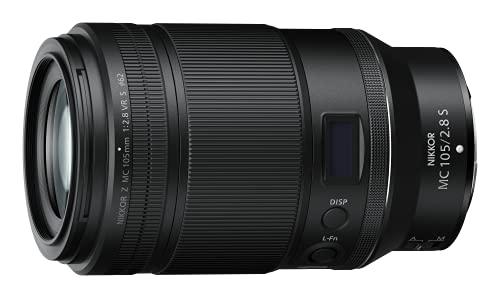
Nikon NIKKOR Z MC 105mm f/2.8 VR S
- S-Line optical design achieves 1:1 magnification with virtually no distortion or aberrations, per Nikon
- Full weather sealing on all moving parts makes it viable in field conditions where lesser lenses fail
- 105mm reach and S-Line construction add size and weight compared to compact alternatives
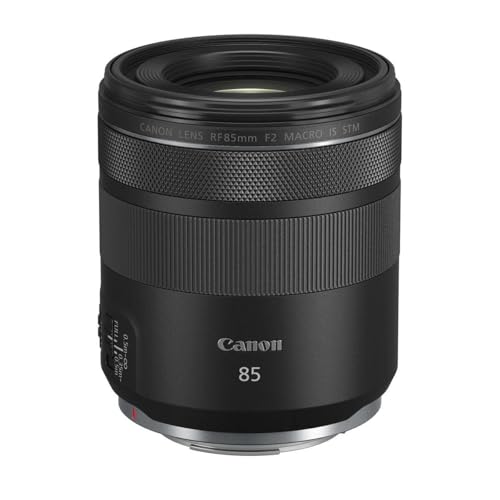
Canon RF85mm F2 Macro is STM Lens
- Bright f/2 aperture and 5-stop Hybrid IS make it the most capable low-light option in this group
- Compact form factor and STM focusing suit run-and-gun hybrid shooters on Canon RF bodies
- 0.5x maximum magnification is macro-style, not true 1:1 — a meaningful limitation for close-up specialists
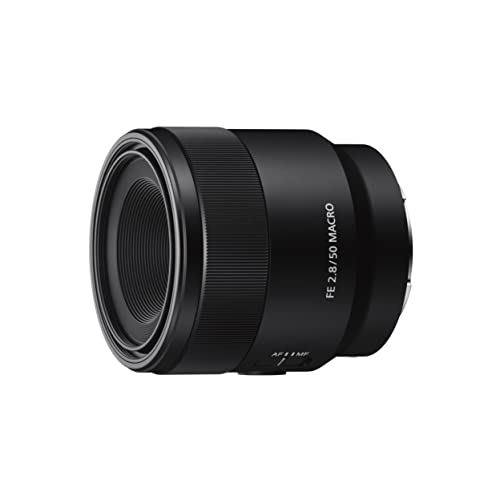
Sony SEL50M28 FE 50mm F2.8 Full Frame E-mount Lens (Black)
- True 1:1 magnification in a compact 2.78-inch, 8.3 oz body — the smallest 1:1 option for Sony E mount here
- 6.25-inch minimum focusing distance suits tight shooting environments where longer macro lenses cannot get close
- 50mm focal length provides less working distance from the subject than 90mm or 105mm alternatives
Where to Buy
Sony FE 90mm F2.8 Macro G OSS Full-Frame LensSee Sony FE 90mm F2.8 Macro G OSS Full-Fr… on Amazon