
Nikon Z30 Prime Lenses Reviewed: 3 Fast Options

Affiliate disclosure: Some links on this page are affiliate links. If you buy through them we earn a small commission at no extra cost to you. Recommendations are research-driven; we don't claim personal use of every product reviewed. Product prices and availability are accurate as of the date published and are subject to change. Always check Amazon for current pricing before purchasing. Learn more.

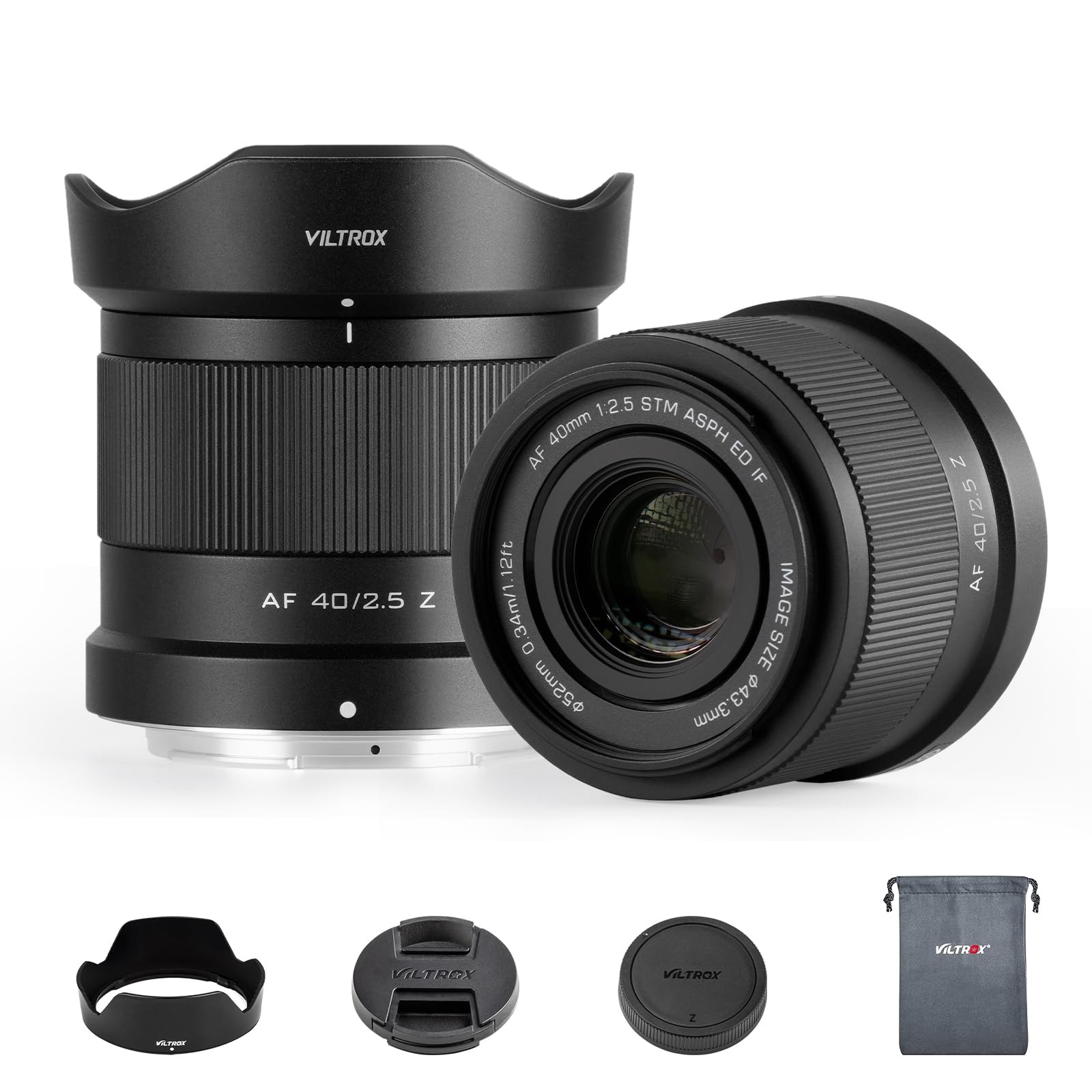
STM silent autofocus motor with full-frame Z-mount compatibility across multiple Nikon mirrorless bodies
See VILTROX 40mm F2.5 Z Mount Lens,AF Ful… on AmazonThe Z 30 pairs naturally with its 16-50mm kit zoom, but that lens has a ceiling. Photographers who push into low light, want genuine background separation, or simply want a sharper result wide open run into it quickly. A fast prime changes the character of the camera, and the Z-mount ecosystem has several compact options worth understanding before you commit.
This guide covers three prime lenses that pair well with the Z 30 system, drawing on optical performance data from DPReview and community consensus from r/Nikon and r/SonyAlpha. For a broader look at what the Z mount offers, the prime lenses hub is a good starting point.
What to Look For in a Prime Lens for the Nikon Z 30
Aperture and What It Actually Buys You
Maximum aperture is the number buyers focus on first, and for good reason. A lens at f/2 or f/2.5 gathers roughly two to three stops more light than the 16-50mm kit zoom at the 40-50mm end of its range. That difference is real in dim restaurant light, indoor sports, or late-afternoon shooting without flash.
Background separation, the degree to which a subject stands out from an out-of-focus background, follows from aperture, focal length, and shooting distance together. On the Z 30’s APS-C sensor at 40mm and f/2, you get a noticeably shallow depth of field at portrait distances. It’s not full-frame bokeh, but it’s a substantial step above what the kit zoom delivers.
The practical ceiling is that wider apertures require more precise autofocus. At f/2 or f/2.5, focus errors that disappear at f/5.6 become obvious in the final image. Autofocus reliability at wide apertures matters as much as the aperture itself.
Sharpness Across the Frame
center sharpness and edge-to-edge sharpness behave differently, and fast primes vary considerably in how they handle both. Many fast primes deliver excellent center sharpness wide open but soft corners until stopped down to f/4 or f/5.6. For portraits and product shots this is irrelevant. For architecture, landscapes, or flat-lay photography, it matters.
DPReview’s optical bench testing is the most reliable public dataset for this comparison. A lens that scores well on center resolution at maximum aperture but shows significant corner falloff is a portrait lens. One that holds across the frame from f/2 is genuinely versatile.
Chromatic aberration and distortion are secondary concerns for most prime lens buyers, both are corrected in-camera and in post, but they are worth checking for lenses used in video work where in-camera correction can introduce rendering artefacts.
Autofocus Behaviour on the Z 30
The Z 30 uses on-sensor phase-detect autofocus across a wide coverage area. How quickly a lens responds to that system depends on the lens’s own focus motor design. Nikon’s STM and linear motor designs are fast and near-silent. Third-party lenses using stepping motors have closed the gap significantly, but behavior varies by firmware version and shooting mode.
For video, which is one of the Z 30’s primary use cases, focus motor noise and hunt behavior matter as much as speed. A lens that focuses accurately but audibly is a problem for in-camera audio. Community reports from r/Nikon and r/videography consistently flag this as a deciding factor for hybrid shooters.
Before settling on a prime, it’s worth reviewing how each option performs in continuous autofocus with moving subjects and in video mode specifically. The compact prime lenses hub includes additional context on motor types and what to expect from each.
Size and System Balance
The Z 30 is a small camera. A large, heavy lens physically and ergonomically unbalances it. The lenses covered here are all compact by design, but there’s still meaningful variation in length, weight, and filter thread diameter. A lens that extends significantly on a short-body mirrorless camera changes how it handles in a bag and on a wrist strap.
For street and travel shooters, a natural audience for the Z 30, front-of-lens size is also a social consideration. Smaller lenses are less conspicuous and less intimidating in public-facing shooting situations.
Top Picks
VILTROX 40mm F2.5 Z Mount Lens
The VILTROX 40mm F2.5 Z Mount Lens is the compact, third-party option for Z 30 owners who want a fast normal prime without first-party pricing. At 40mm on APS-C, the effective field of view sits close to 60mm equivalent, a natural, slightly compressed view that suits environmental portraits and street shooting.
DPReview’s sample crops for this lens show strong center sharpness at f/2.5, with corner performance that improves meaningfully by f/4. For the primary use cases of the Z 30, content creation, travel, casual portrait, that wide-open center performance is what matters most, and it delivers. Verified buyers on Amazon consistently note that wide-open sharpness exceeded their expectations given the price band.
Autofocus on the Z 30 with this lens is reliable in single-shot and continuous modes based on owner reports. Video shooters flag that the stepping motor is quiet enough for most hybrid use, though it is not completely silent in very quiet recording environments. Firmware updates have improved AF tracking performance noticeably since the lens launched, and VILTROX has a reasonable update track record for Z-mount lenses.
The case for this lens is strongest for Z 30 owners who want the fastest-available aperture in a small package at a non-premium outlay. The f/2.5 maximum aperture is half a stop slower than some alternatives, but the optical and autofocus performance relative to what it costs to own is difficult to argue against.
Check current price on Amazon.
NIKKOR Z 40mm f/2
The NIKKOR Z 40mm f/2 is Nikon’s own compact normal prime, and it is one of the strongest arguments for staying within the first-party ecosystem on a budget-conscious Z-system build. It is physically tiny. The collapsed profile makes it closer in size to a pancake lens than a conventional prime, and it balances well on the Z 30 body.
DPReview’s optical testing places this lens among the better-performing compact primes in the Z lineup. center sharpness at f/2 is excellent. Corner performance lags slightly at maximum aperture but resolves cleanly from f/2.8 onward. For the shooting styles the Z 30 attracts, documentary, street, light travel, this is a non-issue in practice. Bokeh character at f/2 at portrait distances is smooth, with no significant onion-ring or nervous rendering that would distract in subject-isolation shots.
Autofocus behavior is exactly what you expect from a first-party Nikon lens on a Nikon body. The AF/MF switch is physical. Eye and face detection respond as reliably as the Z 30’s processor allows. Video performance is quiet and confident, this is a genuinely good hybrid-use lens. Owner consensus across r/Nikon and dedicated Z-system communities is overwhelmingly positive on autofocus responsiveness.
For most Z 30 buyers who want a prime as a first upgrade from the kit zoom, the NIKKOR Z 40mm f/2 is the direct answer. It is small, optically capable, natively integrated, and one of the most recommended single-lens upgrades in the Z system community.
Check current price on Amazon.
Nikon Z f with Special Edition Prime Lens
The Nikon Z f with Special Edition Prime Lens is a different kind of product, it is a full-frame mirrorless camera bundled with a Special Edition 40mm f/2, and it belongs in this comparison because buyers upgrading from the Z 30 frequently land here. The 40mm f/2 included in the bundle is optically equivalent to the standalone NIKKOR Z 40mm f/2, but the bundle context matters.
On a full-frame body, the 40mm focal length renders with a wider field of view, closer to 40mm equivalent rather than the ~60mm equivalent you get on the Z 30’s APS-C sensor. Background separation at f/2 increases substantially on the larger sensor. Photographers who found the Z 30’s APS-C rendering at 40mm slightly compressed for their style will find the Z f’s full-frame rendering at the same focal length more open and natural.
The lens itself performs identically to the standalone version: DPReview’s data shows excellent center sharpness at f/2, strong mid-frame performance, and good corner resolution by f/2.8. The differentiation here is the system, not the optics. Buying into the Z f bundle means buying a premium full-frame body with a retro-influenced control layout that is specifically designed to appeal to photographers who value physical dials over menu-driven control.
The Z f bundle is the right answer for buyers who have outgrown the Z 30 concept, who want more dynamic range, better low-light ISO performance, and a body designed around deliberate, tactile shooting, and want the 40mm f/2 as their primary lens from day one.
Check current price on Amazon.
Buying Guide
APS-C vs. Full-Frame and Focal Length Rendering
The Z 30 is an APS-C camera. Any 40mm lens mounted on it renders at approximately 60mm equivalent. That’s a compressed normal, closer to a short portrait focal length than a traditional street-photography normal. It’s flattering for subjects and useful for isolation. For buyers who want a true 40mm field of view, the Z 30 is the wrong body, not the wrong lens. The Z f bundle, which pairs a full-frame sensor with the same 40mm optic, is the right starting point for that conversation.
Understanding this before purchase prevents the most common disappointment in the Z 30 prime lens space: buyers who expect a 40mm equivalent rendering and receive a 60mm equivalent instead.
First-Party vs. Third-Party Lens Trade-offs
Nikon’s own NIKKOR lenses carry the most reliable autofocus integration with Z-series bodies, the cleanest in-camera correction profiles, and the clearest firmware update path. Third-party lenses from established brands like VILTROX have closed the functional gap significantly, and for the Z 30 specifically, a camera used heavily for video and stills documentation rather than professional photography, the difference in daily use is small.
The practical question is whether perfect autofocus consistency in edge cases, fast subjects, low contrast, video pull-focus, matters for your work. If it does, the NIKKOR Z 40mm f/2 is the safe answer. If it doesn’t, the VILTROX represents strong optical performance at a lower cost of entry. Both are reasonable choices for this system. The prime lens hub covers this trade-off in more depth across a wider range of focal lengths.
Maximum Aperture and Depth of Field Expectations
Both 40mm options here offer maximum apertures of f/2 or f/2.5. On an APS-C sensor, neither will produce the buttery, isolating background blur that a 50mm f/1.4 on full-frame delivers. Expectations matter. What these lenses do deliver, reliably, is a cleanly separated subject against an out-of-focus background at normal portrait distances, particularly in the f/2 to f/2.8 range.
For product photography, casual portraits, and content creation, that is sufficient. For photographers whose primary output is heavily bokeh-driven portraiture, the Z f full-frame bundle is the more appropriate tool.
Autofocus for Video vs. Stills
Z 30 buyers are disproportionately video-forward, and autofocus behavior in video mode is evaluated differently from stills use. Silent focus motor operation, smooth pull-focus transitions, and low hunt behavior are video-relevant metrics that do not appear in optical bench testing. Owner reports and video-focused community reviews are the most useful sources here.
The NIKKOR Z 40mm f/2 performs well in all three categories based on consistent community consensus. The VILTROX 40mm f/2.5 performs well in most conditions, with occasional reports of hunting in very low light video scenarios. For video-primary Z 30 shooters, the first-party lens is the lower-risk choice.
Physical Size and Everyday Carry
Both the VILTROX 40mm f/2.5 and the NIKKOR Z 40mm f/2 are compact lenses that suit the Z 30’s small form factor. The NIKKOR’s collapsed barrel profile makes it particularly suited to bag-and-go use, it is one of the physically smaller lenses available in the Z mount. Buyers who travel light or shoot in street contexts will notice the difference relative to larger fast primes.
Frequently Asked Questions
Is the NIKKOR Z 40mm f/2 a better choice than the VILTROX 40mm f/2.5 for the Z 30?
For most buyers, the NIKKOR Z 40mm f/2 is the safer recommendation, it offers native autofocus integration, reliable video performance, and one-third stop more light than the VILTROX. The VILTROX is optically competitive and represents a meaningful cost saving at the premium price band. Buyers who shoot primarily stills in good light will find the difference in daily use small. Video-primary shooters should lean toward the NIKKOR for quieter, more consistent autofocus behavior.
What does 40mm actually look like on the Z 30’s APS-C sensor?
On the Z 30’s APS-C sensor, a 40mm lens renders at approximately 60mm equivalent. That is a slightly compressed normal view, closer to a short portrait focal length than a wide street-photography angle. It suits environmental portraits, product photography, and documentation at moderate distances. Photographers expecting a traditional wide-normal look will find it tighter than anticipated and may want to consider the 28mm or 24mm Z-mount options instead.
Should I buy the Z f bundle instead of a Z 30 with a prime lens?
The Z f bundle makes sense if you are ready for a full-frame upgrade and want the 40mm f/2 as your primary lens from the start. The Z f offers substantially better high-ISO performance, wider dynamic range, and a different control philosophy than the Z 30. If you are currently satisfied with the Z 30’s feature set and primarily want a faster lens, the standalone NIKKOR Z 40mm f/2 or VILTROX 40mm f/2.5 is the more efficient upgrade. The Z f bundle is a system decision, not a lens decision.
How important is autofocus speed for prime lenses on the Z 30?
Autofocus speed matters considerably for moving subjects and video work, and less so for static subjects in good light. The Z 30’s phase-detect system is capable, but lens motor design shapes how that capability expresses in practice. First-party NIKKOR lenses are consistently faster and quieter in video AF than third-party alternatives. For sports or fast action, a first-party lens is the stronger choice.
Can these lenses be used for video on the Z 30 without external audio?
Yes, with caveats. Both the NIKKOR Z 40mm f/2 and the VILTROX 40mm f/2.5 have stepping motors that are quiet enough for most video use. The NIKKOR is widely reported as near-silent in autofocus operation. The VILTROX produces slightly more audible focus motor noise in very quiet recording environments, which the Z 30’s built-in microphone can pick up if the subject is close and the room is silent.
VILTROX 40mm F2.5 Z Mount Lens,AF Full Frame Lens for Nikon Mirrorless Cameras Z5 Z50 Z6II Z7II ZFC Z30 Z9 Z8 Z6 Mark II Z7 Mark II Compact Lightweight Prime Lens: Pros & Cons
- STM silent autofocus motor with full-frame Z-mount compatibility across multiple Nikon mirrorless bodies
- Lightweight at approximately 180g with a 10-element, 6-group optical structure and f2.5 maximum aperture
- Fixed 40mm focal length offers no zoom flexibility
- Maximum magnification of 0.14x limits close-up and macro capability
Where to Buy
VILTROX 40mm F2.5 Z Mount Lens,AF Full Frame Lens for Nikon Mirrorless Cameras Z5 Z50 Z6II Z7II ZFC Z30 Z9 Z8 Z6 Mark II Z7 Mark II Compact Lightweight Prime LensSee VILTROX 40mm F2.5 Z Mount Lens,AF Ful… on Amazon