
Fujifilm X-T50 Mirrorless Camera Review with XF 16-50mm

Affiliate disclosure: Some links on this page are affiliate links. If you buy through them we earn a small commission at no extra cost to you. Recommendations are research-driven; we don't claim personal use of every product reviewed. Product prices and availability are accurate as of the date published and are subject to change. Always check Amazon for current pricing before purchasing. Learn more.

Film simulation modes for in-camera JPEG quality
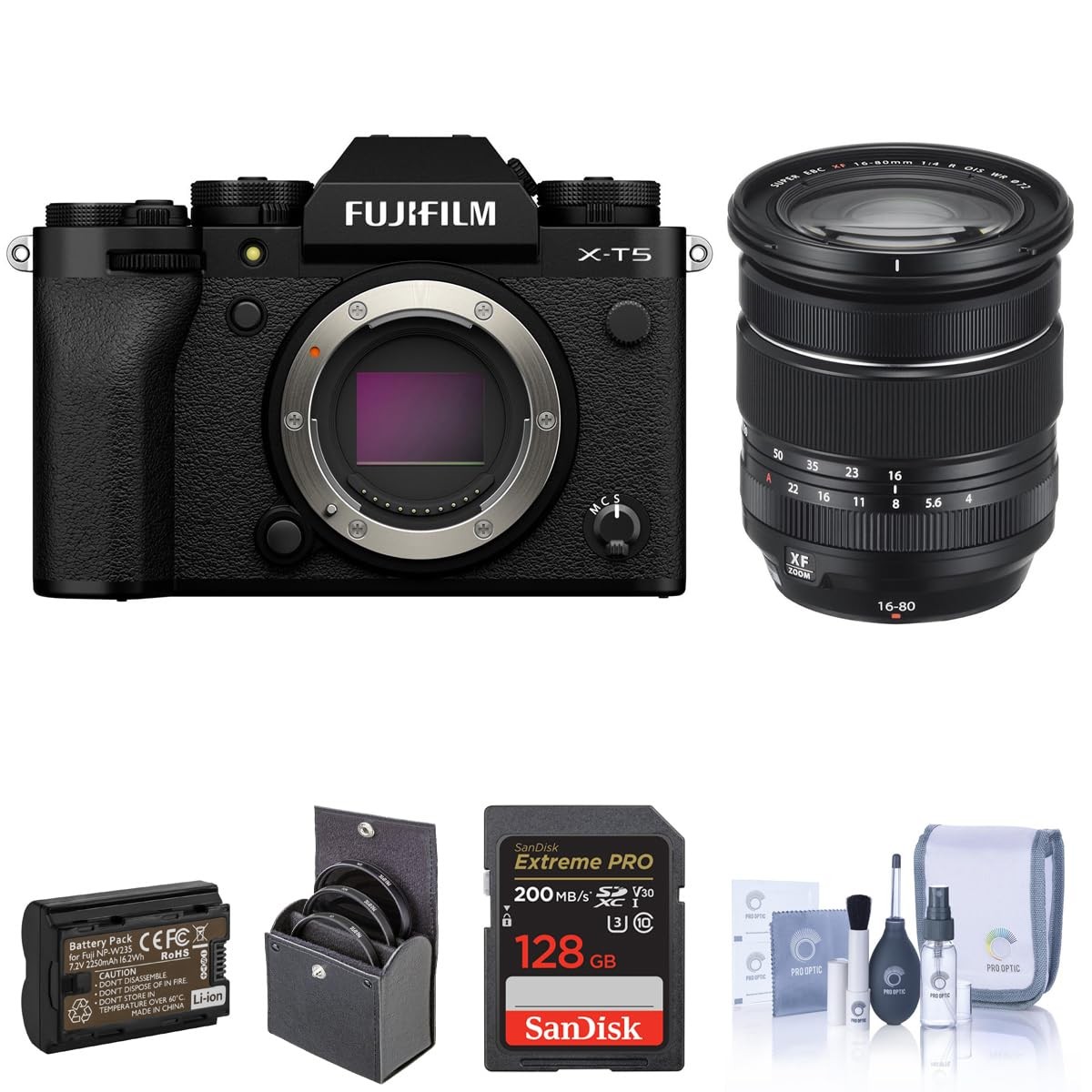
See Fujifilm X-T5 Mirrorless Camera Black… on AmazonChoosing a mirrorless camera kit means weighing sensor resolution, autofocus reliability, and how naturally the body fits your shooting style , and the Fujifilm X-T line covers a wider range of those trade-offs than most buyers realize at first glance. If you’re researching Fujifilm Cameras before committing, the X-T50 and X-T5 represent two genuinely different answers to what a capable APS-C camera should prioritize.
Understanding what each configuration actually delivers , and for whom , is the point of this breakdown.
What to Look For in a Fujifilm X-T Mirrorless Camera
Sensor and Resolution
The X-T line split into two distinct resolution tiers with the X-T5 and X-T50. The X-T5 carries a 40.2MP BSI-CMOS sensor , the same architecture used in the flagship X-H2 , while the X-T50 uses a 40.2MP X-Trans CMOS 5 HR sensor in a more accessible body configuration. Both sensors resolve fine detail at a level that comfortably supports large prints and aggressive crops.
The X-Trans color filter array, which Fujifilm uses across both bodies, arranges photosites in a 6×6 irregular pattern rather than the standard Bayer grid. Owner reports and DPReview’s testing consistently note that this reduces moiré patterning in fabric and fine textures without a separate optical low-pass filter. The trade-off is that some third-party raw processors handle X-Trans demosaicing less cleanly than Bayer files , worth knowing if you shoot raw and use Lightroom primarily.
For buyers who predominantly shoot JPEG, neither concern applies. Fujifilm’s in-camera processing pipeline, including its 20 film simulation modes, renders JPEGs that regularly outperform what most shooters extract from raw in post. That’s a genuine differentiator at this tier.
Autofocus Performance
Both bodies use Fujifilm’s phase-detection AF system with subject-recognition capability covering people, animals, birds, cars, motorcycles, bicycles, and aircraft. The X-T50 runs the same subject-detection algorithms as the X-T5, which represents a meaningful upgrade over earlier X-Trans bodies where face detection was the ceiling.
Verified buyer reports across both bodies note that eye-detection in good light is reliable and responsive. In low light or at longer focal lengths, phase-detection coverage density matters more , the X-T5’s focus frame array is denser, which shows in continuous tracking of moving subjects at telephoto. For stationary subjects and controlled environments, both bodies perform comparably.
The 16-80mm f/4 kit lens included with the X-T5 configurations is optically stabilized, which interacts favorably with the body’s in-body image stabilization (IBIS) on the X-T5. The X-T50 body does not include IBIS , worth weighing if hand-held shooting in low light is a primary use case.
Ergonomics and Controls
The physical control layout is a defining characteristic of the X-T line and a meaningful reason buyers choose it over competitors. Both bodies use dedicated top-plate dials for shutter speed, ISO, and exposure compensation. This means dialing in an exposure without navigating menus , a workflow that professional and enthusiast shooters consistently cite as the reason they stay in the Fujifilm ecosystem.
The X-T5 is slightly larger than the X-T50 and accommodates a deeper grip. The X-T50 is more compact , closer in size to the X-E line , which makes it better suited to smaller hands or travel configurations where packing space is constrained. Neither body is large by mirrorless standards.
Film simulation dials are present on both: the X-T50 adds a dedicated Film Simulation dial on the left top plate, borrowing from the X100VI’s layout, which lets you cycle through simulations without entering any menu. Shooters who use JPEG-first workflows will find this genuinely useful.
Lens Ecosystem and System Investment
Both bodies use the Fujifilm X-mount, giving access to the full XF and XC lens lineup , currently more than 40 native lenses including primes, zooms, and macro options. For buyers new to Fujifilm Cameras, this is one of the strongest APS-C lens ecosystems available, with optical quality across the range that regularly draws comparisons to full-frame native glass.
The 16-80mm f/4 OIS WR lens bundled with the X-T5 configurations covers a versatile range equivalent to 24-122mm in full-frame terms. It’s weather-resistant, optically stabilized, and widely regarded in the Fujifilm community as a strong all-rounder. It’s not the sharpest lens in the lineup at any focal length, but for a walk-around kit lens, the combination of range, stabilization, and build quality is a reasonable compromise.
Body-only buyers should budget for a lens. The X-T50 body-only listing pairs well with XF primes , the XF 35mm f/2 WR and XF 23mm f/2 WR are frequently recommended as first lenses in r/Fujifilm threads for buyers coming from other systems.
Top Picks
Fujifilm X-T5 Mirrorless Camera Black with XF 16-80mm f/4 R OIS WR Lens
The Fujifilm X-T5 Mirrorless Camera Black with XF 16-80mm f/4 R OIS WR Lens is the most complete single-purchase option here for buyers who want a high-resolution body and a capable walk-around lens in one transaction. The 40.2MP sensor delivers files with the detail density to crop significantly and still land a usable image , a quality that matters for wildlife, travel, and event shooting where repositioning isn’t always possible.
The bundle includes a 128GB SD card, an extra battery, and a filter kit alongside the body and lens. Extra battery capacity is practically significant with mirrorless bodies , the X-T5 is rated for approximately 580 frames per charge under CIPA conditions, which is reasonable but not exceptional. Having a second battery available from day one avoids an early frustration most new mirrorless owners encounter.
Film simulation performance on this body is strong. Fujifilm’s Provia, Velvia, and Classic Neg modes in particular produce JPEGs that owner reports consistently describe as requiring minimal post-processing. For shooters who want to leave an event with finished files rather than a raw processing backlog, that’s a practical workflow advantage. The 1-year warranty coverage included with this bundle offers additional purchase confidence.
Check current price on Amazon.
Fujifilm X-T5 Mirrorless Digital Camera with 16-80mm Lens Bundle
The Fujifilm X-T5 Mirrorless Digital Camera with 16-80mm Lens Bundle covers the same core camera configuration , 40.2MP X-T5 body paired with the XF 16-80mm f/4 OIS WR lens , but the bundle composition differs. This package adds Corel editing software, graduated color filters, a large camera bag, additional lens filters, and a cleaning kit.
The Corel software inclusion is meaningful if you plan to shoot raw and prefer desktop editing over a subscription workflow. Fujifilm’s own RAW FILE CONVERTER EX is free but limited; Corel’s suite handles X-Trans files competently and is a reasonable starting point for buyers who haven’t settled on a post-processing application. The graduated color filters function as creative accessories for landscape and architectural work, though their practical value depends heavily on your shooting subjects.
Where this bundle adds clear value over the first listing is the camera bag and the expanded filter set. A large camera bag sized for a mirrorless kit plus the 16-80mm lens is a genuine accessory cost offset. The distinction between the two X-T5 bundles comes down to which accessories align with your actual workflow , extra battery and SD card, or editing software and carrying solution.
Check current price on Amazon.
Fujifilm X-T50 Mirrorless Digital Camera Body - Silver
The Fujifilm X-T50 Mirrorless Digital Camera Body - Silver is the right choice for buyers who already own X-mount glass, or who want to choose their first lens deliberately rather than default to the 16-80mm kit. The body carries Fujifilm’s 40.2MP X-Trans CMOS 5 HR sensor , the same resolution tier as the X-T5 , in a more compact, lighter package.
The dedicated Film Simulation dial is the most distinctive feature relative to the X-T5. Borrowed from the X100VI, it lets you cycle through all 20 of Fujifilm’s film simulations from a top-plate control without touching a menu. For JPEG-first shooters who use simulations actively, this changes the shooting rhythm meaningfully. Verified buyers in r/Fujifilm describe it as the feature they didn’t know they wanted until they had it.
The absence of IBIS is the primary trade-off compared to the X-T5. Paired with optically stabilized lenses , including the XF 16-80mm f/4 OIS WR , the practical impact on still shooting is modest in most conditions. For video shooters or anyone hand-holding in low light frequently, the gap widens. The silver colorway is also a meaningful consideration: the X-T50 Silver is among the more visually distinctive bodies in the current Fujifilm lineup, drawing directly on the aesthetic of the original X-T1.
Check current price on Amazon.
Buying Guide
Choosing Between the X-T5 and X-T50
The core decision is between the X-T5’s deeper ergonomics and IBIS, and the X-T50’s more compact form factor and Film Simulation dial. Both sensors resolve at 40MP. Both support the full X-mount lens lineup. The X-T5 is the stronger choice for buyers who shoot hand-held in challenging light, work with longer lenses, or prioritize video quality , its IBIS system and deeper grip make a practical difference across those use cases.
The X-T50 suits buyers who prioritize portability, already own a stabilized lens, and shoot predominantly in controlled or outdoor daylight conditions. The Film Simulation dial is a genuine workflow advantage for committed JPEG shooters. For buyers exploring the full range of Fujifilm camera bodies before deciding, the ergonomic difference between the two bodies is worth handling in person if possible.
Bundle vs. Body-Only
The X-T5 bundles here represent two different accessory philosophies. The first bundle (SD card, extra battery, filter kit, warranty) addresses the immediate operational gaps most buyers encounter in the first month of ownership. The second bundle (Corel software, bag, filters, cleaning kit) addresses setup and workflow infrastructure. Neither is universally superior.
Body-only purchases make sense when you have a clear lens plan and prefer to source accessories independently. Buying a bundle where half the accessories don’t match your workflow dilutes the value. Evaluate each item in the bundle against what you would actually buy separately.
Lens Pairing for Body-Only Buyers
The X-T50 body-only listing gives you full flexibility to pair the sensor with any X-mount lens. For travel and general use, the XF 18-55mm f/2.8-4 OIS provides a versatile range with optical stabilization and is frequently available used at reasonable prices. For a more compact walk-around setup, the XF 27mm f/2.8 WR pancake is the smallest viable prime for daily carry.
Portrait-oriented buyers consistently pair the X-T50 with the XF 56mm f/1.2 R WR, which produces subject separation and rendering quality that r/Fujifilm users regularly compare favorably to full-frame 85mm equivalents. For buyers stepping up from a kit zoom, adding a single fast prime typically produces a larger quality jump than a body upgrade.
Video Capability
Both bodies support 6.2K video recording, which exceeds what most buyers actually need for distribution. The more practical consideration is the X-T5’s IBIS for hand-held video , without it, the X-T50 produces noticeably shakier footage unless mounted on a gimbal or tripod. F-Log2 recording on both bodies preserves dynamic range for color grading, and Fujifilm’s Eterna Cinema simulation provides a usable starting point if you want in-camera color without a grading step.
Neither body is positioned as a primary video production tool , both lack full-size HDMI and have recording limits that dedicated video bodies do not. For hybrid shooters who want competent video as a secondary capability, both are adequate. For video-primary workflows, the absence of IBIS on the X-T50 is a more significant limitation.
JPEG Quality and Film Simulations
Fujifilm’s film simulation system is one of the most substantive differentiators between X-mount bodies and competitors at comparable resolution levels. The 20 available simulations , including Velvia for saturated landscape work, Classic Chrome for street photography, and Nostalgic Neg for warmer portrait rendering , are refined enough that many buyers use them as their primary output, skipping raw processing entirely.
Both the X-T5 and X-T50 run the same film simulation engine with identical simulation options. The difference is access: the X-T50’s dedicated Film Simulation dial makes switching faster. For buyers who already know which simulations they use regularly, this is a meaningful ergonomic advantage.
Frequently Asked Questions
Does the Fujifilm X-T50 have in-body image stabilization?
The X-T50 does not include IBIS. This is the most significant ergonomic difference between the X-T50 and the X-T5, which does include a five-axis IBIS system. For hand-held still shooting in good light, the gap is minimal when using an optically stabilized lens. For low-light hand-held shooting or video without a gimbal, the X-T5’s IBIS provides a meaningful practical advantage.
Is the XF 16-80mm f/4 OIS WR a good kit lens for the X-T5?
Owner consensus is that the 16-80mm f/4 OIS WR is among the more capable kit lenses Fujifilm offers , weather-sealed, optically stabilized, and covering a versatile range equivalent to 24-122mm in full-frame terms. It’s not the sharpest lens in the XF lineup at any focal length, but for travel, events, and general use, the combination of range and stabilization is a strong starting point. Buyers who prioritize sharpness often pair it with XF primes for dedicated use cases.
What is the difference between the two X-T5 bundles listed here?
Both bundles include the X-T5 body and XF 16-80mm f/4 OIS WR lens. The first bundle focuses on operational essentials: a 128GB SD card, extra battery, filter kit, and a 1-year warranty. The second bundle adds Corel editing software, graduated color filters, a large camera bag, additional lens filters, and a cleaning kit. The right choice depends on whether your primary gaps are immediate shooting needs or workflow and carrying infrastructure.
How does the X-T50’s Film Simulation dial work?
The X-T50 includes a dedicated top-plate dial , borrowed from the X100VI , that lets you cycle through all 20 of Fujifilm’s film simulation modes without entering the camera’s menu system. Each click of the dial advances to the next simulation, and the EVF or LCD updates the preview in real time. Shooters who use film simulations actively as a primary color-grading step describe this as a significant workflow improvement over navigating the Quick Menu on the X-T5.
Can the X-T50 or X-T5 be used with older Fujifilm lenses?
Both bodies are fully compatible with all X-mount lenses, including older XF lenses released since the X-Pro1 in 2012. Autofocus speed and subject-detection capability on older lenses will depend on the lens’s own AF motor and whether it has received firmware updates for subject recognition. The Fujifilm X-T50 Mirrorless Digital Camera Body - Silver and X-T5 both support lens-based firmware updates via the camera body, which extends compatibility as Fujifilm releases improvements.
Fujifilm X-T5 Mirrorless Camera Black with XF 16-80mm f/4 R OIS WR Lens, 40.2MP APS-C Sensor, 6.2K Video, 128GB SD Card, Extra Battery, Filter Kit, Cleaning Kit, 1-Year Warranty: Pros & Cons
- Film simulation modes for in-camera JPEG quality
- Compact body with tactile controls
- Smaller lens selection compared to full-frame systems
Where to Buy
Fujifilm X-T5 Mirrorless Camera Black with XF 16-80mm f/4 R OIS WR Lens, 40.2MP APS-C Sensor, 6.2K Video, 128GB SD Card, Extra Battery, Filter Kit, Cleaning Kit, 1-Year WarrantySee Fujifilm X-T5 Mirrorless Camera Black… on Amazon