
Fujifilm X-T30 III Mirrorless Camera Review with 13-33mm Lens

Affiliate disclosure: Some links on this page are affiliate links. If you buy through them we earn a small commission at no extra cost to you. Recommendations are research-driven; we don't claim personal use of every product reviewed. Product prices and availability are accurate as of the date published and are subject to change. Always check Amazon for current pricing before purchasing. Learn more.

Film simulation modes for in-camera JPEG quality
See Fujifilm X-T30 III Mirrorless Camera … on AmazonChoosing a mirrorless kit camera requires balancing sensor output, handling confidence, and long-term system value , and Fujifilm’s APS-C lineup delivers all three in a package that rewards shooters who care about the craft of photography, not just megapixel counts. The X-T30 III arrived as one of the more anticipated compact-system updates in the Fujifilm Cameras range, pairing a refined sensor with the tactile control layout the brand has made its signature.
The XC13-33mm lens kit puts a versatile walkaround focal range in your hands from day one. This guide covers sensor performance, autofocus behavior, ergonomics, and where each available configuration fits within the broader Fujifilm system.
What to Look For in a Fujifilm APS-C Mirrorless Kit
Sensor and Image Processing
The sensor matters, but the processor matters equally in a Fujifilm body. The reason is film simulations , Fujifilm’s in-camera JPEG pipeline is not a novelty filter layer, it is the product of decades of color science developed for professional film stocks. Provia, Velvia, Classic Chrome, and Eterna Bleach Bypass each produce a distinct tonal and color response that holds up to print and publication use. For photographers who shoot JPEG, or who want a low-edit workflow, the processor’s ability to render those simulations faithfully is the core value proposition.
X-Trans sensor architecture, which Fujifilm uses across its higher-tier bodies, arranges photosites in a pseudo-random 6×6 pattern rather than the standard Bayer 2×2 grid. This eliminates the optical low-pass filter in most implementations and produces strong fine-detail rendering, particularly in foliage and fabric textures. The trade-off is that some third-party raw processors have historically struggled with X-Trans demosaicing, producing worm-like artifacts in fine detail. Adobe Camera Raw and Lightroom have improved substantially, but Fujifilm’s own Capture One Express (included with bodies) remains the most reliable option for raw workflows.
Resolution should be evaluated against your actual output needs. A 26MP X-Trans sensor covers prints to A2 and substantial digital cropping. Buyers moving to 40MP should be honest with themselves about whether their shooting workflow , lenses, technique, handholding habits , will resolve the additional detail in practice.
Autofocus System and Subject Tracking
Fujifilm’s phase-detection autofocus has matured significantly over the past four years. Subject recognition , covering faces, eyes, animals, and vehicles , operates reliably in adequate light for most current-generation bodies. The areas where Fujifilm AF still trails Sony and Canon are low-light phase detection below EV -3 and complex tracking through busy backgrounds, such as sports in cluttered environments.
For the X-T30 III’s target buyer , street, travel, portrait, and everyday documentary , the AF system performs without meaningful limitation in real conditions. Continuous AF tracking on a walking subject in street light is predictable and confident. For dedicated sports or wildlife shooting, the X-T series is not the primary tool; the X-H2S exists for that purpose and offers substantially more sophisticated subject tracking.
Zone selection, face detection, and the ability to assign back-button AF all function as expected. The X-T30 III lacks a joystick for direct AF point selection , a constraint inherited from its compact form factor , which means relying on the four-way pad or touch-to-focus on the rear LCD.
Ergonomics and Control Layout
Fujifilm’s top-plate dial design is the most tactile control layout in APS-C mirrorless. Dedicated shutter speed, exposure compensation, and ISO dials mean you can see and set exposure without entering a menu. For photographers who learned on film or who prefer deliberate, analog-feeling control, this layout changes how it feels to work.
The X-T30 III is a compact body , noticeably smaller than the X-T5 and substantially smaller than the X-H series. The grip is shallow. Buyers with larger hands consistently report fatigue during long handheld sessions and some benefit from an aftermarket grip accessory. This is not a flaw; it is a form-factor trade-off that the compact design requires.
Body-only buyers who add heavier XF lenses should consider whether the balance point serves their shooting style. The XC13-33mm kit lens is designed for compact balance , it pairs well with the X-T30 III’s form factor in a way that heavier glass does not.
Lens Ecosystem and System Investment
Fujifilm’s X-mount lens catalog is mature and deep. More than 35 native XF lenses cover prime focal lengths from 8mm to 200mm, zoom ranges from ultrawide to telephoto, and a full set of fast primes optimized for portrait and available-light work. The XC sub-lineup , including the 13-33mm kit lens , offers more compact and accessible glass at the cost of build quality and maximum aperture.
Third-party support from Tamron, Viltrox, and Sigma (via adapter or native mount) has expanded substantially in recent years. Viltrox in particular now offers AF primes in popular focal lengths that perform reliably with Fujifilm’s subject-detection system.
The limitation that matters is cross-system: X-mount glass does not adapt cleanly to other manufacturers’ bodies. System investment in Fujifilm is a deliberate commitment. Buyers evaluating the X-T30 III should be aware that the lenses they buy are X-mount lenses, and the system’s long-term value depends on staying within the ecosystem. That ecosystem is strong , but buyers who are uncertain about long-term platform allegiance should factor that into the decision.
Top Picks
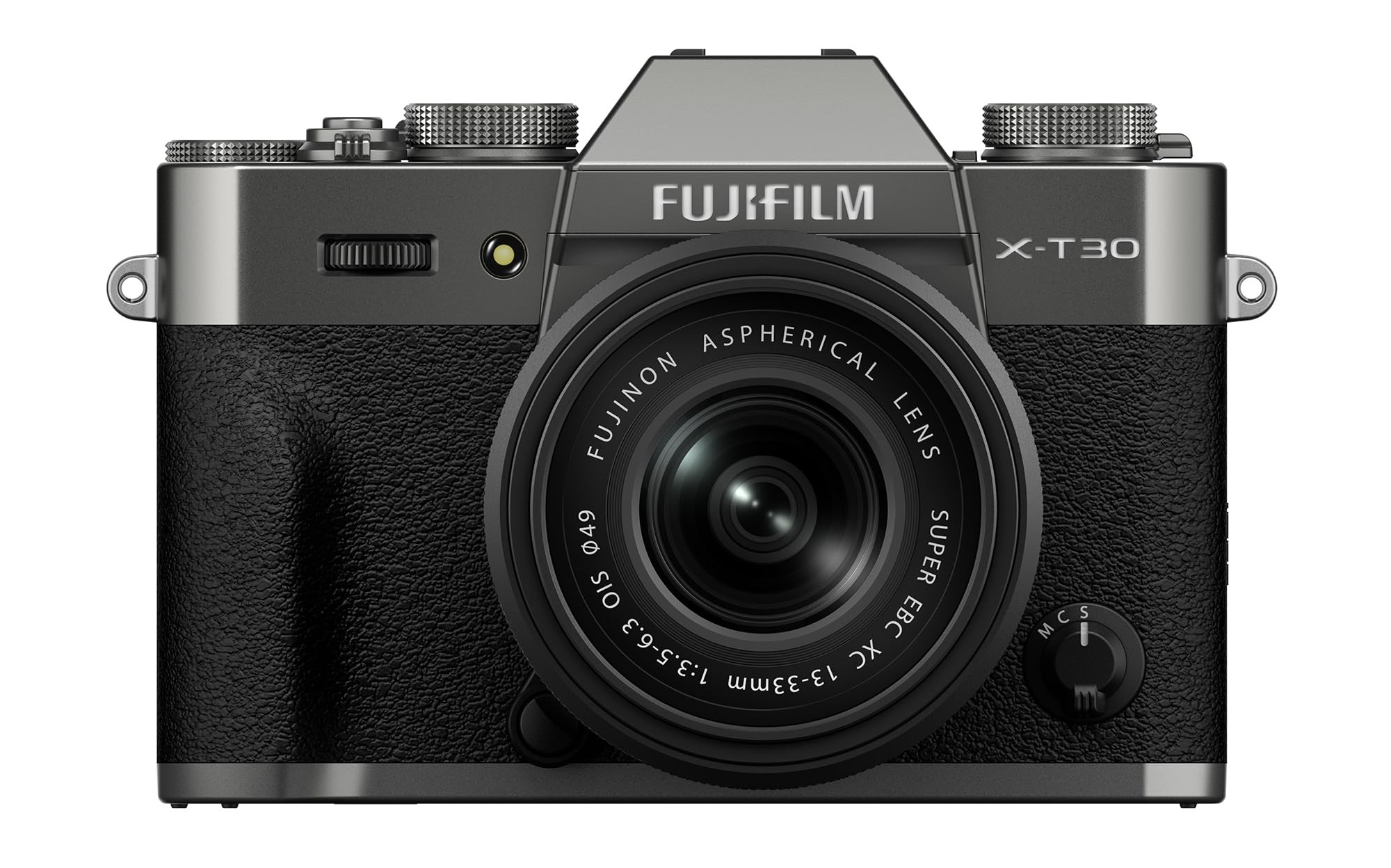
Fujifilm X-T30 III Mirrorless Camera Body, with XC13-33mm Lens Kit, Charcoal Silver
The Fujifilm X-T30 III Mirrorless Camera Body, with XC13-33mm Lens Kit, Charcoal Silver is the configuration for buyers who want the full walkaround kit in a finish that reads as refined without being conspicuous. The charcoal silver colorway matches the retro aesthetic Fujifilm has maintained since the X-series launched, and owner reports consistently note that the finish holds up well to everyday carry.
The XC13-33mm lens covers a 35mm equivalent range of approximately 20-50mm , genuinely useful for street, travel, and environmental portrait work. At its wide end it handles tight interior spaces and urban scenes; at 33mm it lands in the flattering compression range for casual portraits. Owner reviews describe the lens as sharp at mid-apertures in the center frame, with expected softness wide open toward the corners , consistent with what you’d anticipate from a compact kit lens optimized for size over maximum optical performance.
Film simulation access is the feature that separates this kit from comparably priced alternatives. Verified buyers shooting JPEG consistently report that Classic Chrome and Classic Neg render street and travel work with a tonal quality that requires minimal post-processing. The 26MP X-Trans sensor resolves fine detail in brick, foliage, and fabric in a way that Bayer sensors at comparable resolution often do not.
Check current price on Amazon.
Fujifilm X-T30 III Mirrorless Camera Body, with XC13-33mm Lens Kit, Black
The Fujifilm X-T30 III Mirrorless Camera Body, with XC13-33mm Lens Kit, Black is the same specification as the Charcoal Silver configuration , same sensor, same processor, same lens , in a finish that reads as more contemporary and less conspicuous in street environments. For documentary shooters and travelers who prefer to minimize camera presence, the all-black finish is the functional choice.
Owner feedback on both colorways is essentially identical in terms of performance. Where buyers do differentiate is in how the finish wears over time. Black paint on Fujifilm bodies is known to show brassing on high-contact points , the corners, the grip edge, the control dials , which some photographers find characterful and others find distracting. The charcoal silver colorway shows wear differently, typically as a lightening of the silver tones rather than exposed metal underneath.
For buyers deciding between these two configurations, the question is purely aesthetic preference and how you relate to visible wear on a camera body. There is no performance argument for either finish. The optical and sensor output will be identical across identical shooting conditions.
Check current price on Amazon.
Fujifilm X-T5 Mirrorless Camera Black with XF 16-80mm f/4 R OIS WR Lens
The Fujifilm X-T5 Mirrorless Camera Black with XF 16-80mm f/4 R OIS WR Lens represents a meaningful step up in resolution and lens quality for buyers whose output demands it. The 40.2MP X-Trans sensor produces files with substantially more cropping headroom and print resolution ceiling than the 26MP X-T30 III. Buyers who regularly print large or crop aggressively for publication will notice the difference.
The XF 16-80mm f/4 R OIS WR lens is a considerably more capable walkaround zoom than the XC13-33mm. The optical image stabilization is effective for handholding at longer focal lengths, the weather-resistant construction handles light rain and dusty conditions, and the constant f/4 maximum aperture gives consistent depth-of-field control across the zoom range. Verified buyers who shoot travel and documentary work in varied conditions report that the OIS combined with the sensor’s dynamic range produces usable files in conditions where the X-T30 III kit lens would require more careful technique.
The trade-off is form factor and system investment. The X-T5 with the XF 16-80mm is noticeably heavier and larger than the X-T30 III kit. The body itself is smaller than the X-H series but the XF zoom adds substantial mass. Buyers who are stepping into Fujifilm for the first time should be confident in their commitment to the system before investing at this level , the XF glass is excellent but it is a significant financial and platform commitment. For buyers already in the Fujifilm ecosystem or with clear output requirements that the X-T30 III cannot meet, the X-T5 kit is the stronger answer.
Check current price on Amazon.
Buying Guide
Sensor Resolution and Your Actual Output Needs
The question to ask before choosing between the X-T30 III and X-T5 is not which sensor is better , it is which sensor resolution serves your actual output. For digital publishing, social media, and prints to A2, the 26MP X-T30 III produces more than sufficient resolution. The 40MP X-T5 adds value for buyers who crop significantly, print large format, or need file headroom for editorial licensing.
Resolution also compounds with technique requirements. Higher pixel-pitch sensors reward precise focus and good handheld technique more than forgiving sensors do. If your shooting is fast-moving and spontaneous, the X-T30 III’s sensor is not a limitation. It may actually be the more practical choice.
Kit Lens vs. Prime Strategy
The XC13-33mm kit lens is a practical starting point but not a long-term walkaround solution for demanding work. Its f/3.5-6.3 maximum aperture limits low-light performance and shallow depth-of-field control in a way that dedicated primes do not. Buyers who purchase the X-T30 III kit and then invest in a 35mm f/2 or 23mm f/1.4 as a second lens will find their shooting capability expands substantially.
Alternatively, the XF 16-80mm f/4 with the X-T5 offers a constant aperture and stabilization that the XC kit lens cannot match. For buyers who want a single-lens travel solution that handles varied light without switching glass, the X-T5 kit is worth the step up. For buyers who prefer prime lenses and are starting the system, the X-T30 III kit with a planned prime purchase is a sensible entry path into the broader Fujifilm camera system.
Autofocus Expectations by Shooting Style
Fujifilm’s subject-recognition AF on current X-series bodies handles portrait, street, and travel shooting reliably. Face and eye detection are fast and accurate in adequate light. Where expectations need calibration is in low-light tracking and complex multi-subject scenes , the system performs well but not at the level of Sony’s latest subject-tracking implementation.
The absence of a joystick on the X-T30 III matters depending on your AF selection workflow. Touch-to-focus via the rear screen works well for stationary or slow-moving subjects. For run-and-gun documentary where you need instant AF point repositioning, the X-T5’s joystick provides a meaningful ergonomic advantage.
Ergonomics and Long-Session Shooting
Both X-T30 III kits share the same compact body. Buyers with medium to large hands consistently note that extended handheld sessions produce fatigue that the deeper-grip X-T5 or X-H bodies do not. An aftermarket thumbrest or L-bracket grip accessory addresses this effectively.
The top-plate dial layout , the defining ergonomic feature of the X-T series , rewards deliberate exposure control. Shooters who prefer to set exposure before raising the camera to their eye will find the Fujifilm layout more intuitive than mode-dial-based systems. Shooters who prefer to adjust exposure reactively through electronic controls may find the dedicated dials slightly slower in fast-changing light.
Color Work and JPEG vs. Raw Workflow
Fujifilm’s film simulation system is the most compelling reason to choose the platform for photographers who care about color. The in-camera JPEG output from Provia, Astia, Classic Chrome, and Eterna is not replicable in post-processing without significant manual effort , the tonal response curves and color science are native to the processor. Buyers who shoot JPEG or who want a low-edit workflow will get more usable files out of a Fujifilm body than from comparably specified cameras from other manufacturers.
Raw shooters benefit from Fujifilm’s Capture One Express license, which handles X-Trans demosaicing accurately. Adobe Lightroom has improved its X-Trans support but still occasionally produces fine-detail artifacts. The workflow decision , JPEG-primary, Capture One raw, or Lightroom raw , should factor into the buying decision, particularly for buyers transitioning from Bayer-sensor systems.
Frequently Asked Questions
What is the difference between the Charcoal Silver and Black X-T30 III kits?
The hardware, sensor, processor, and lens are identical across both color configurations. The only difference is the exterior finish. Charcoal silver shows wear as lightening of the silver tones on high-contact areas; black paint brasses to show metal underneath over time. Owner preference on finish wear varies , some photographers find the patina of a well-used black camera appealing, others prefer the more uniform aging of the silver.
Does the X-T30 III support face and eye detection autofocus?
Yes. The X-T30 III includes subject-recognition AF with face and eye detection for humans and animals. Performance in adequate light is reliable for portrait, street, and documentary work. The body lacks a joystick for direct AF-point repositioning, so complex AF-point selection relies on the four-way pad or rear touchscreen.
How does the XC13-33mm kit lens compare to the XF 16-80mm f/4 on the X-T5 kit?
The XC13-33mm is a compact, lightweight kit lens with a variable f/3.5-6.3 aperture and no weather sealing. The XF 16-80mm f/4 offers a constant maximum aperture, optical image stabilization, and weather-resistant construction , meaningfully more capable for low-light handholding and outdoor use in variable conditions. The XF lens is heavier and larger. For buyers who need one versatile lens that handles varied shooting conditions reliably, the Fujifilm X-T5 kit is the stronger choice.
Is the Fujifilm X-T30 III a good first mirrorless camera for someone coming from a phone or point-and-shoot?
Owner consensus suggests yes, with one caveat. The top-plate dial layout is intuitive for photographers who want to understand exposure directly, but it requires learning the relationship between shutter, aperture, and ISO in a way that fully automatic modes obscure. Buyers who want to learn photography deliberately will find the Fujifilm control philosophy rewarding. Buyers who want automatic handling with occasional manual override may find the dedicated dials less flexible than a traditional PASM mode dial.
Can the X-T30 III use XF lenses, or is it limited to XC glass?
The X-T30 III uses the standard X-mount, which accepts all native XF and XC lenses fully , autofocus, image stabilization, and electronic aperture all function as designed. XF lenses deliver higher build quality, wider maximum apertures, and more consistent optical performance than XC glass. The XC13-33mm kit lens is a practical starting point; adding an XF prime as a second lens substantially expands the system’s creative range. Third-party X-mount lenses from Viltrox and Tamron are also fully compatible.
Fujifilm X-T30 III Mirrorless Camera Body, with XC13-33mm Lens Kit, Charcoal Silver: Pros & Cons
- Film simulation modes for in-camera JPEG quality
- Compact body with tactile controls
- Smaller lens selection compared to full-frame systems
Where to Buy
Fujifilm X-T30 III Mirrorless Camera Body, with XC13-33mm Lens Kit, Charcoal SilverSee Fujifilm X-T30 III Mirrorless Camera … on Amazon